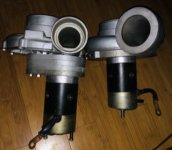
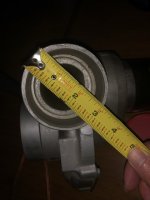
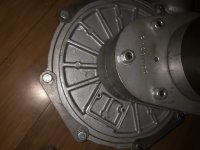
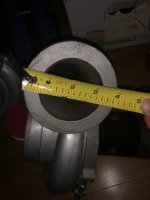
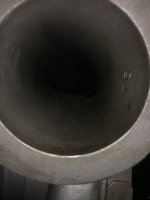
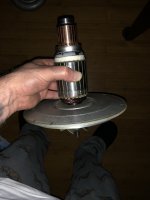
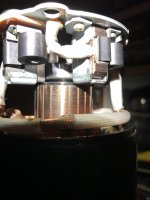
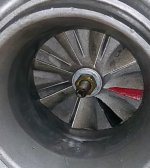
I have had these Electric superchargers that Thomas Knight made back in 2004 would love to be able to make them perform better with new Technology

turbosmart44

New member
So After Thomas Knight did rewinding on the starter motor he reached 10,000 rpm and 5.0KW per motor. They worked but in 2004 battery technology, ESC, and brushless motor technology just wasn’t there yet.
Alex After watching you build your electric supercharger and the advancements in technology makes me want to revamp my set up and go brushless !
The smaller supercharger is not direct driven and doubles the speed from the motor to the turbine impeller By a Harley Davidson drive belt on 2 cog gears with bearings and is made for up to 2.5 L four-cylinder The larger one is Direct drive and Was designed four a V6 up to 3.5 L at lower boost level higher CFM. The motors just need more rpm they have almost to much torque and hit very hard when turned on but it was just hard wired on or off no speed control!
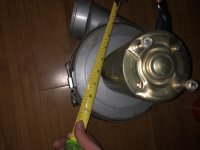
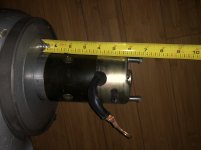
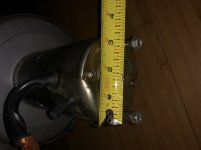
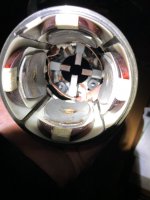
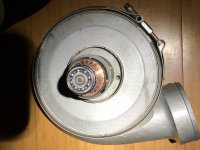
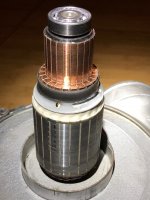
I have a 1.8 L 4 cylinder Acura type R that I was wanting to put either one single or compound both turbos. Any thoughts or recommendations would be awesome on what I would need to do to make 300 whp on boost right now I’m at 205 whp @ 9000 rpm NA . Here’s pics of the E charges. 3A362662-F4A9-40A8-9769-483234341C53.jpeg906B5C8B-ADBB-4198-B86E-3360A3F49222.jpeg21BA3001-C058-4153-95DD-62338BF1A30D.jpeg
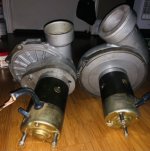
 
Those are great starting points! The TP Power motors - 5860 and 5870 would both work well with those. In fact, I might be selling mine soon - pm me if you're interested and you live in the US. No obligation what so ever - not even sure I want to sell them yet tbh. But that would be my knee-jerk thought. Do you have any sort of additional data about the compressors? Any maps? If no maps, how about some measurements of the impellers? I'd love to see the insides of those. Particularly how the motor connects to the impeller on the direct-drive unit.
 
I’m not sure about the compressor maps. They were built so long ago and the original company’s name were ground off and painted over . I may be wrong but I thought the smaller one was a vortech and the big may be a Garrett. Also the Impeller were custom made and balanced with red and blue permanent marker on the blades and then a timing light was used. What Measurements should I take to help with knowing more about the compressors Besides the inlet and outlet?
 
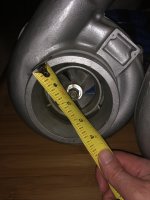
The most useful piece of info would be the outside diameter of the impellers. That would at least give us an idea of what kind of rpm you should be looking at. I've collected enough data at this point (usually by blowing stuff up) to have an idea of what you'd need to hit 300 whp in your Acura. Basically, you're looking at needing about 8kW of running power. Assuming the right rpm, of course. Either way, chances are the bigger unit is more likely to work better.
 
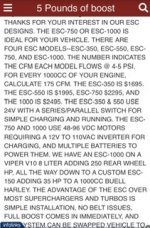
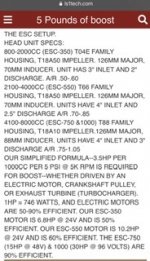
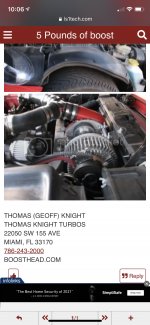
I found these old pics and articles from Thomas Knight who is the person that built my E Chargers. I have esc-750CFM direct drive and esc-550CFM but it’s not Direct drive it has higher boost cause of the big gear on the starter and smaller gear connected to the impeller shaft driven with a Harley drive belt causing the rpm to almost double.

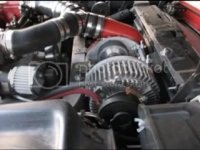
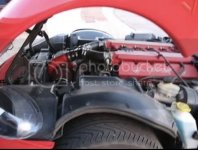
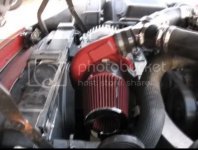
The pics of the red E-charger Below are of his 1000CFM Esc on a Viper adding 250 whp and the article is from a LS forum telling about his different models of e chargers.
I went for a ride in his Honda Insight hybrid it had a screw/ Eaton blower with a starter motor powering it at 24 volt it felt like 60 shot of nitrous when turned on making that 3 cylinder go from a 17s second 1/4 mile to a 14 second and that’s when I knew I wanted one lol

9D589C0E-F68E-46DF-80BC-78C8C02B19DE.jpeg93454FE3-1A20-4FF2-B4AD-2147F87DCBF3.jpeg

Here is Esc1000 on Dodge Viper 96VDC motor.

8DFE2A1D-9F16-4414-A8CD-24887D7EF689.jpeg


E3F07E2F-E1CA-4B7C-8F79-6F03ECAF771E.jpegE52D1637-D7BC-4E17-98ED-E4B495270E96.jpegA4C6E1E4-6047-44DD-8350-BF5EB5E06791.jpeg61804512-545F-4525-A321-16C28DD008F3.jpeg
 
Last edited:
Here is the Esc750 T88 housing ,T18A10 impeller, 126mm major, with 88 mm inducer. 4 inch inlet and 3 inch discharge, A/R. 75-1.05 with 15 Hp starter motor @ 48 volts. E5F43AE9-82CC-4545-8E5B-F2CDC5DF4D57.jpegB41FA354-5D1B-4E2D-8BB7-366311889492.jpeg7FFF4777-9AD4-4470-AFBD-23F2720F67E8.jpeg
77BEF033-17EB-4917-BF38-8D661A088B54.jpegFA313338-07F5-4835-9AAD-F247F35B4F15.jpegF8AF0F9B-947A-4674-8A44-054502CFA966.jpeg
 
If I'm reading that right (I also did a google search and found the same information written up in this thread: https://ls1tech.com/forums/ls4-performance/734864-5-pounds-boost.html) it looks like they all have a 126mm outside diameter. This article (besides making your brain hurt), pretty clearly explains a larger volute is more efficient at higher flow rates: https://docs.lib.purdue.edu/cgi/viewcontent.cgi?article=2500&context=icec

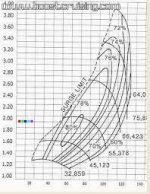
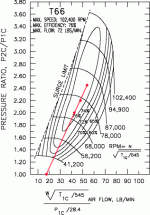
If it was me, I'd go with the bigger one - it'll likely perform better at lower rpm than the smaller one. In fact, I dug up compressor maps for both - alas, the T88 one is tiny - you'll have to zoom in; but the T66 is small but more legible. You're looking for about 7.5 psi to hit your goal - that's a pressure ratio of 1.5. I would be targeting 400 crank hp - which would be the "40" on the X axis. If you compare the two, you'll see that the smaller one needs more RPM and is closer to choke (the right of the map). It'll be less than 70% efficient at that point, require more drive power and you'd need find a motor that can spin to 56,000 rpm under load - I'm not aware of any motors like that that exist. With the T88 at that HP level, you'll be about 78% efficient, and you'll only need to spin it to 42,000-43,000 rpm. I happen to have a TP Power motor sitting behind me that's perfect for that. I can give you the model number, or if you want the one I have (I'm not using it anymore) you can PM me. But no pressure either way. Feel free to buy a brand new one. The only concern with the bigger turbo is that you'll need to ramp it up as the engine builds rpm to keep it out of surge. But that would also make your tuning window much bigger (less likely to damage pistons).

HTH

T88Map.jpg

t66copy.gif
 
BTW - The TP Power motor is the one I used on my first dyno test. Where we hit 437 rwhp (through a powerglide - your trans has less slip). That's about 575 crank hp, but it was loaded harder (i.e. less rpm). It should be perfect for your application (7kW continuous, 15 kW peak, 50,000 max rpm - though I've found that one can run at at least 12kW continuously, with proper cooling). In other words, that's your motor.

The bigger one, the one I used on our first drag tests, is limited to 40,000 rpm - it won't be fast enough.
 
Since I don’t have any machining equipment it’s going to be harder to do the conversion to a brushless motor than I Thought. Not sure how to adapt the Tp motor cause I took everything apart and the Impeller seems to be pressed on the starter shaft bearings then a 13mm bolt and washer . Here’s the pic below. I completely forgot how it was put to gather ! Any thoughts? If I could get it to stay cool by venting and cooling the starter can / motor I could step from 24 volts up 48. And double my rpm.

360D4903-148E-421B-91BE-D03E9DFE7BC6.jpeg6BB00BB6-1B17-4827-8EEB-B944F7C9826D.jpeg4937253E-5F51-4260-87E8-D844FF7ECF85.jpegEAF9C474-D096-40B7-8189-54D170DC6AA4.jpeg186ADA07-6533-4398-BA06-36061C1A37B9.jpeg4958322F-0F8B-429C-868A-98810B8D617B.jpeg5F0315DA-742D-4208-A8CF-06E55D8B765B.jpeg38260C43-11AA-495B-B613-308B1DE42E3E.jpegA8495A46-9C66-4754-817D-D3561FD9D383.jpeg77DAA68E-F90B-4B96-AFC2-D3FADE5F2B8B.jpeg
 
You can try removing the impeller the same way you'd remove a vortech impeller. Loosen the nut but keep it on the end of the threaded portion (keeps the impeller from falling off all the way, and damaging the threads). Hold it so the impeller is facing down, then heat the impeller with a propane torch - keep the torch moving; and don't let any part of the impeller get too hot. You only want to get the impeller up to 400-500* F. Any more than that and you'll start to anneal it. The part you want to get hot is the area around the shaft, not the vanes - and the vanes have a lot less thermal mass and will get hot very quickly - keep the torch moving and focused on the center and it should work (I've done this myself before). Aluminum expands more than steel. Once it's all hot, start tapping on the nut (shaft) with a hammer, and the impeller should slide down. You shouldn't have to hit it too hard. It's also possible that it's loctited in place, in which case heat should make it slide off.

Once you have the two separated, then I'd reuse the starter shaft to make an adapter to the brushless motor. It is going to take some machining. The concern I immediately have is that he used a right-hand thread, and the way the impeller spins it should loosen it. You really want a left-handed thread there. Then you'll have to figure out some sort of bearing arrangement.

To be honest, it would be much less work to use the supercharger I suggested in this thread: https://www.electrifiedboost.com/threads/here-is-the-supercharger-i-would-start-with.20/

The compressor map is friendlier to making decent power on a lot of engines and the bearing/shaft issue is already sorted. If you go with a belt drive, your motor options open up a bit (though you really should be close to a 1:1 ratio in your application anyway), and you can make the motor mount without a mill. But you'll be getting friendly with files and you'll need some measuring stuff that you probably don't have; but there are cheap tricks I can guide you with. Like using a marble tile instead of a machinist's granite surface plate. Not as good, but good enough for this. And $6 vs $600.

BTW, those motors are a terrible choice for this. But back in the day there weren't a lot of options like we have now. It might actually be easier to convert the brushed started motors to brushless - but that is a lot of work as well, and you won't know the specs of what you made...
 
Top